Fence Insurance Coverage Explained: Limits, Exclusions and Claims

Fences are often covered by homeowners insurance, but coverage is tied to policy structure, limits, exclusions, and how claims are valued. That is where many homeowners get confused.
This guide explains how fence insurance coverage works, how insurers value fences, what policy limits may apply, and where coverage gaps can show up.
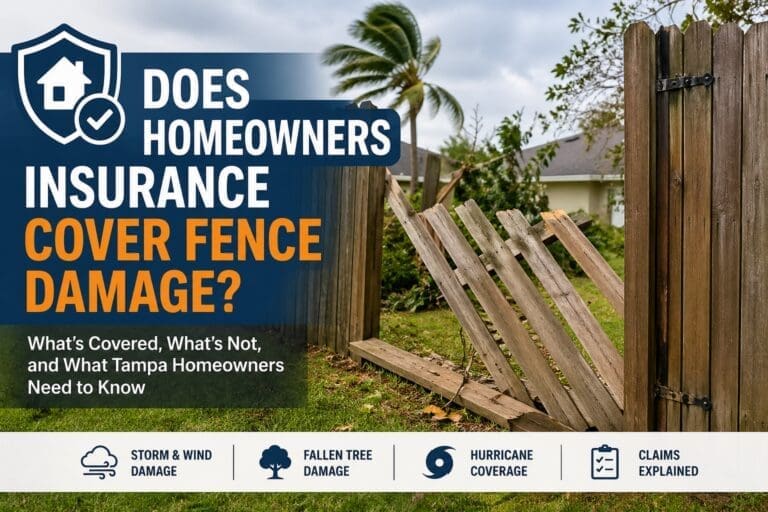
If you are trying to determine whether a recent storm, fallen tree, or wind event damaged your fence and whether that specific damage may be covered, read our guide on Does Homeowners Insurance Cover Fence Damage?
Fences Usually Fall Under Other Structures Coverage
Most standard homeowners policies place fences under Other Structures Coverage, often called Coverage B.
This part of the policy usually covers structures on the property that are not attached to the house, including:
- Fences
- Detached garages
- Sheds
- Gazebos
- Mailboxes
Coverage B is often set as a percentage of dwelling coverage.
Example:
If your home is insured for $350,000 and your Other Structures coverage is 10%, you may have $35,000 available for detached structures combined.
That total is not always reserved for the fence alone. It may have to cover multiple structures.
That is why reviewing your limits matters, especially if you have:
- Long perimeter fencing
- Premium aluminum fencing
- Masonry or custom fencing
- Pool fencing
- Large estate or acreage fencing
What Fence Insurance Coverage Usually Pays For
When a covered loss damages a fence, insurance may pay for repair or replacement, subject to deductibles and policy terms.
Coverage may apply to sudden damage caused by covered perils listed in the policy.
That often includes:
- Wind
- Hail
- Fire
- Lightning
- Vandalism
- Vehicle impact
- Fallen trees from covered events
The exact events depend on your policy.
Fence Claims Are Limited By Deductibles
Coverage does not always mean a claim payout makes sense.
Your deductible comes first.
If your deductible is $1,500 and fence repairs cost $1,800, a claim may only pay $300.
Many small fence losses fall into that category.
Before filing a claim, compare:
- Repair estimate
- Replacement estimate
- Deductible amount
- Potential claim impact
That simple math often answers whether a claim is worth filing.
Replacement Cost vs Actual Cash Value Matters
This is where many homeowners get surprised.
Some policies may pay replacement cost.
Others may pay actual cash value.
Those are not the same.
Replacement Cost Coverage
Replacement cost coverage may pay what it costs to rebuild with like kind and quality, subject to limits.
That usually means less out-of-pocket expense.
Actual Cash Value Coverage
Actual cash value may factor depreciation.
Older fences may be valued lower than replacement cost.
Example:
A 12-year-old wood fence may cost $8,000 to replace.
Insurance may value its depreciated value far below that.
You may have to cover the difference.
Check your policy wording here.
It matters.
Fence Material Can Affect Valuation
Insurance carriers may look at fence material, age, and expected lifespan.
A basic pressure-treated wood fence may be treated differently than:
- Ornamental aluminum fencing
- Composite privacy fencing
- Masonry walls
- Custom cedar fencing
- Pool code fencing
Material affects replacement cost.
It can also affect whether higher limits make sense.
Building Code Upgrades May Not Be Fully Covered
This catches homeowners off guard.
If a damaged older fence must be rebuilt to meet newer code requirements, standard coverage may not always pay those upgrade costs.
That can matter for:
- Pool safety fence requirements
- Height requirements
- Wind-load standards
- Gate latch requirements
- HOA or municipal compliance rules
Some policies offer ordinance or law coverage that may help with those costs.
Check whether your policy includes it.
Shared Fences and Liability Issues
Insurance questions are not always about storm damage.
Sometimes they involve liability.
Examples:
A neighbor damages a shared fence.
A vehicle hits your fence.
A damaged fence causes injury.
A fence around a pool creates liability exposure.
These situations may involve liability coverage rather than just property coverage.
Shared fences can also raise ownership questions.
Why Insurance Companies Ask About Your Fence
Many homeowners are surprised insurers ask about fencing.
There is a reason.
They may be assessing:
- Liability exposure
- Pool safety compliance
- Dog containment risks
- Property condition
- Claim exposure from deteriorated fencing
Old failing fences can create risk.
Custom or high-value fences can affect replacement exposure.
The questions are often about underwriting, not just whether a fence exists.
Can You Increase Fence Coverage?
Yes.
If your current Other Structures limit feels low, ask your insurer about options.
Possible options may include:
- Increasing Other Structures limits
- Adding endorsements
- Scheduling high-value structures separately
This may make sense if your fence would be expensive to rebuild.
Particularly with:
- Large custom aluminum fences
- Premium privacy fencing
- Decorative masonry fencing
- Estate perimeter fencing
What Homeowners Should Review Now
A quick policy review can help avoid surprises later.
Check:
- Your Other Structures coverage limit
- Your deductible
- Whether coverage is replacement cost or actual cash value
- Whether ordinance or law coverage exists
- Whether your fence replacement cost exceeds current limits
Take photos of the fence while it is in good condition.
Keep records.
That can help if a claim ever arises.
The Big Picture
Yes, fences are commonly insured.
But the bigger question is not whether a fence is covered.
It is:
- How much coverage exists
- How losses are valued
- What exclusions may apply
- Whether limits are enough
- Whether filing a claim makes financial sense
That is what homeowners should understand.
If you are dealing with actual fence damage right now and want to know whether wind, hurricanes, fallen trees, or similar events may be covered, read Does Homeowners Insurance Cover Fence Damage? for a full breakdown.