
How Fence Companies Handle Boundary Verification
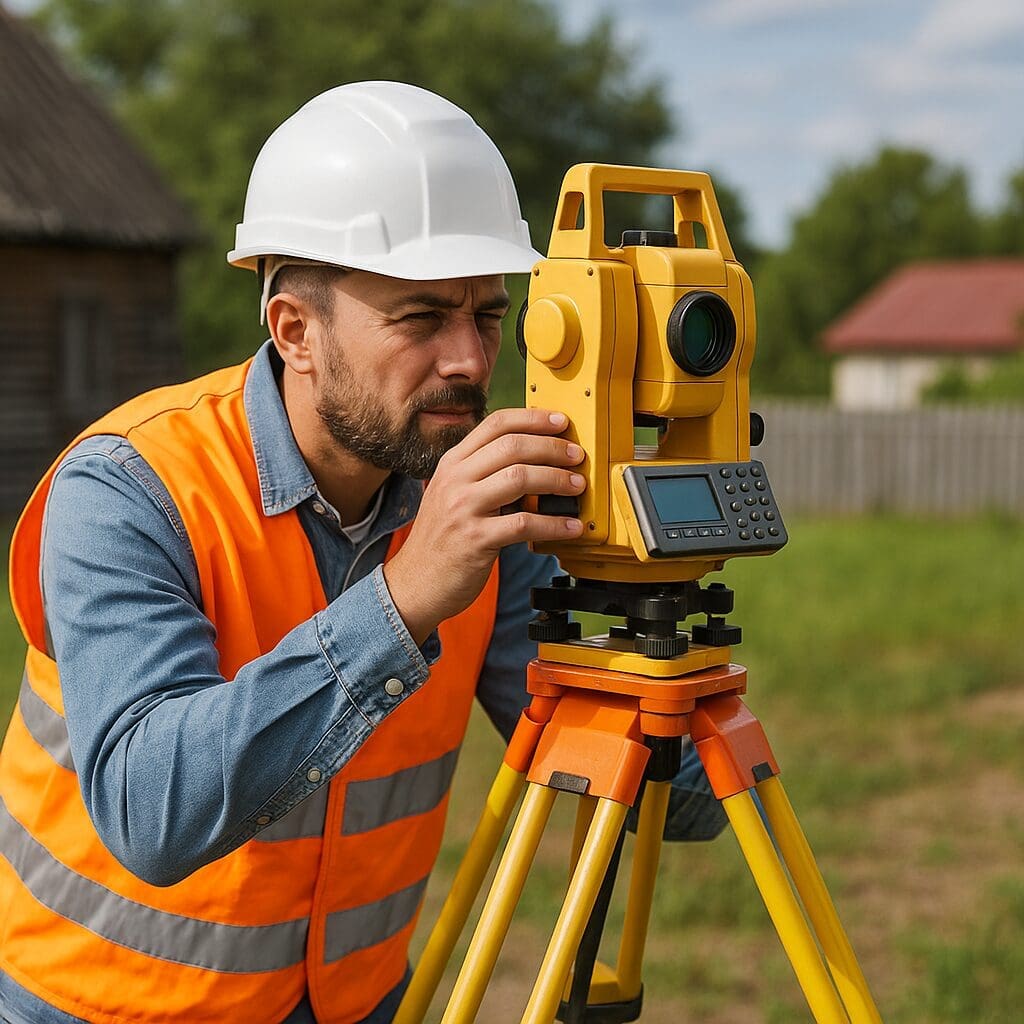
Building a fence always starts with the same big question: Where exactly is the property line? That one thing controls everything else—where posts can go, how tall the fence can be, and even who owns it if there’s ever a dispute.
Do Fence Companies Survey Land?
No, fencing companies do not survey land. That part’s handled by a licensed land surveyor. A true survey is a legal document that maps out your property boundaries, usually based on the original subdivision plat and deeds filed with the county. Surveyors use GPS, total stations, and historical records to mark the official corners of your lot.
Fence contractors aren’t trained or licensed to do this. They also can’t legally establish boundaries. If they guess wrong and install a fence outside the line, you’re responsible for the mistake.
Do Fence Companies Check Property Lines?
Yes, kind of. But not in the way people usually hope.
Fence companies will often ask if you have a survey, a plat map, or existing property pins they can refer to. If you’ve got clear markers and documentation, they’ll build according to that. But they won’t go digging for pins unless you already know where to look. And if things are unclear? They’ll likely tell you to hire a surveyor first.
Some companies might eyeball where other fences or structures are, but that doesn’t mean it’s correct. In older neighborhoods, fences can be way off. People build inside the line just to avoid disputes, or sometimes they build over it without knowing.
Will a Fence Company Find or Verify Your Property Line?
No, they won’t verify it. And they won’t find it unless you’ve already marked it out or have a recent survey.
Here’s what they might do:
- Ask you for a copy of your plat map (the drawing you get when you buy a house).
- Use visible boundary markers like survey pins, iron rods, or corner monuments if they’re easy to spot.
- Follow an old fence line if you approve it, even if it might be wrong.
But none of that counts as official. If you’re in doubt, you need a real surveyor.
Do You Need a Survey to Build a Fence?
Sometimes yes, sometimes no. Here’s how it breaks down:
You likely need a survey if:
- You can’t find your property pins.
- There’s no visible boundary and neighbors are close.
- You’re building close to the line (within a few inches or feet).
- There’s a disagreement with a neighbor.
You might not need one if:
- You already have a recent survey and the pins are marked.
- You’re building well inside the line, like 6-12 inches on your side.
- There’s an old fence that you’re replacing in the same exact spot (and everyone agrees on it).
Cities or HOAs may also require a survey for permit approval. So always check the local rules first.
Can Fence Companies Pull the Plat?
No, not usually. The homeowner pulls the plat. You probably got a copy when you bought the house, maybe tucked in your closing papers. You can also get one from the county or your title company.
Some fence companies might help you read it, but it’s still your job to provide it.
Do Fencing Companies Provide Surveys?
No, they don’t. And if one says they do, be careful. Either they’re subcontracting a real surveyor (which is fine), or they’re just making guesses (which isn’t).
Always make sure any survey is done by a licensed land surveyor, not a general contractor.
How Do Fence Companies Handle Boundary Work?
Here’s what usually happens:
- They ask what documentation you have. Plat map? Survey? Marked pins?
- They check visible reference points. Sometimes it’s pins, sometimes corners of the house.
- They recommend a survey if it’s unclear. This protects both them and you.
- They offset the fence if needed. If the line’s uncertain, they might build 6″ to 12″ inside your side as a buffer.
- They get your approval. Even if you guess the line, they won’t move forward without your OK.
Practical Advice Before You Build
- If you don’t know where your property line is, stop and find out.
- Get a boundary survey if there’s any doubt. It might cost $500-$1200 depending on your area and lot size.
- Mark the pins clearly with flags or stakes. That helps everyone.
- Talk to your neighbor first if you’re building near the edge. Avoid headaches.
- Give the fence company everything you have. Plat, survey, HOA guidelines, permits—all of it.
Getting the line right is worth the effort. Because once a fence goes in, it’s a whole lot harder (and more expensive) to move.


